


Page 82 - Azerbaijan State University of Economics
P. 82
THE JOURNAL OF ECONOMIC SCIENCES: THEORY AND PRACTICE, V.78, # 2, 2021, pp. 74-88


                    During 2001-2006, the total number of jobs created in this sector increased by nearly
                    32%. In the next eleven years, total employment created by the firms has increased
                    by 147.4%. This significant increment in the number of firms and employment is
                    due to the government interventions to support the manufacturing sector through a
                    range  of  incentives  like  favorable  land  lease  rates,  access  to  commercial  credit,
                    protect  medium  and  large  scale  manufacturing  industry  to  sustain  in  the  market,
                    technology  link  with  kaizen  institute,  value  chain(textile),  free  imports  of  inputs,
                    generous tax breaks, together with substantial investments to improve infrastructure
                    and human capital (Ansu et al., 2016).

                    On the other hand, agro-processing, textile and garment industries, and wood and
                    paper  industries  were  the  three-dominant  job-creating  sectors  constituting  nearly
                    72% of the total employment created a job opportunity in the study sectors in 2001.
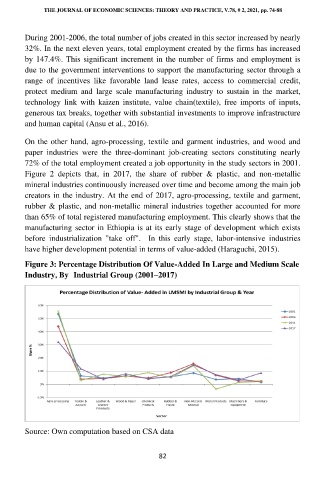
                    Figure  2  depicts  that,  in  2017,  the  share  of  rubber  &  plastic,  and  non-metallic
                    mineral industries continuously increased over time and become among the main job
                    creators in the industry. At the end of 2017, agro-processing, textile and garment,
                    rubber & plastic, and non-metallic mineral industries together accounted for more
                    than 65% of total registered manufacturing employment. This clearly shows that the
                    manufacturing sector in Ethiopia is at its early stage of development which exists
                    before  industrialization  "take  off".    In  this  early  stage,  labor-intensive  industries
                    have higher development potential in terms of value-added (Haraguchi, 2015).

                    Figure 3: Percentage Distribution Of Value-Added In Large and Medium Scale
                    Industry, By  Industrial Group (2001–2017)


                    Source: Own computation based on CSA data


                                                           82

