


Page 104 - Azerbaijan State University of Economics
P. 104
THE                 JOURNAL OF ECONOMIC SCIENCES: THEORY AND PRACTICE, V.82, # 2, 2025, pp. 96-116

                        inherits variations from    . A reduction in     due to SDC outflows thus reduces


                    lending unless recycled.

                    Central bank recycling and multiplier on credit
                    If the central bank recycles SDC liabilities by purchasing government bonds and then
                    financing bank lending (or directly lending), the contractionary effect is dampened.
                    Denote recycling parameter    ∈ [0,1], the share of SDC inflows the central bank uses
                    to restore bank funding:
                         =   (1 −   )     .                                                                                                                 (12)


                    When  γ=1,  no  net  disintermediation  occurs;  when  γ=0,  the  full  deposit  outflow
                    reduces banks’ lending proportional to θ.

                    CALIBRATION
                    This section documents the baseline parameter choices used in the paper, the simple
                    steady-state  mapping  used  for  reduced-form  intuition,  and  a  compact  robustness
                    sweep. The calibration is illustrative for a representative small open economy and is
                    chosen to make model comparative-statics transparent. In Section 5.1, we also provide
                    specific directions for calibrating models of small open economies.

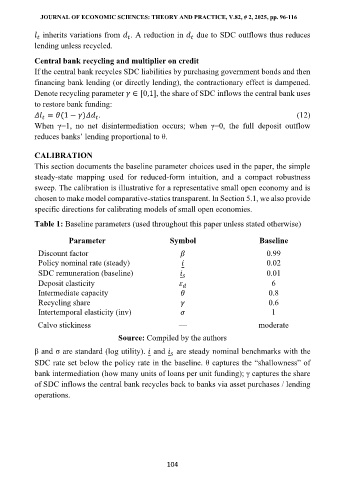
                    Table 1: Baseline parameters (used throughout this paper unless stated otherwise)

                              Parameter                     Symbol                    Baseline
                     Discount factor                                                    0.99
                     Policy nominal rate (steady)                                       0.02
                     SDC remuneration (baseline)                                        0.01

                     Deposit elasticity                                                   6

                     Intermediate capacity                                               0.8
                     Recycling share                                                     0.6
                     Intertemporal elasticity (inv)                                       1

                     Calvo stickiness                         —                       moderate
                                            Source: Compiled by the authors

                    β and σ are standard (log utility).    and     are steady nominal benchmarks with the

                    SDC rate set below the policy rate in the baseline. θ captures the “shallowness” of
                    bank intermediation (how many units of loans per unit funding); γ captures the share
                    of SDC inflows the central bank recycles back to banks via asset purchases / lending
                    operations.


                                                           104

