


Page 40 - Azerbaijan State University of Economics
P. 40
THE                      JOURNAL OF ECONOMIC SCIENCES: THEORY AND PRACTICE, V.82, # 2, 2025, pp. 32-60


                                     Unemp                                   Exp
                    30                                  4.5E+10
                    25                                  4.0E+10
                    20                                  3.5E+10
                    15                                  3.0E+10
                    10                                  2.5E+10
                    5                                   2.0E+10
                      2000   2005   2010   2015  2020         2000   2005  2010   2015   2020
                                    Inflation                               Oil_price
                    10                                    120
                    8                                     100
                    6                                      80
                    4                                      60
                    2                                      40
                    0                                      20
                      2000   2005   2010   2015  2020         2000   2005  2010   2015   2020
                                                           GDP
                                       9E+12
                                       8E+12
                                       7E+12
                                       6E+12
                                       5E+12
                                       4E+12
                                            2000  2005   2010   2015   2020
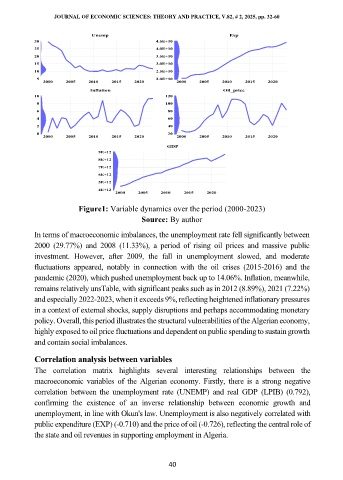
                                 Figure1: Variable dynamics over the period (2000-2023)
                                                   Source: By author

                    In terms of macroeconomic imbalances, the unemployment rate fell significantly between
                    2000  (29.77%)  and  2008  (11.33%),  a  period  of  rising  oil  prices  and  massive  public
                    investment.  However,  after  2009,  the  fall  in  unemployment  slowed,  and  moderate
                    fluctuations  appeared,  notably  in  connection  with  the  oil  crises  (2015-2016)  and  the
                    pandemic (2020), which pushed unemployment back up to 14.06%. Inflation, meanwhile,
                    remains relatively unsTable, with significant peaks such as in 2012 (8.89%), 2021 (7.22%)
                    and especially 2022-2023, when it exceeds 9%, reflecting heightened inflationary pressures
                    in a context of external shocks, supply disruptions and perhaps accommodating monetary
                    policy. Overall, this period illustrates the structural vulnerabilities of the Algerian economy,
                    highly exposed to oil price fluctuations and dependent on public spending to sustain growth
                    and contain social imbalances.

                    Correlation analysis between variables
                    The  correlation  matrix  highlights  several  interesting  relationships  between  the
                    macroeconomic  variables  of  the  Algerian  economy.  Firstly,  there  is  a  strong  negative
                    correlation  between  the  unemployment  rate  (UNEMP)  and  real  GDP  (LPIB)  (0.792),
                    confirming  the  existence  of  an  inverse  relationship  between  economic  growth  and
                    unemployment, in line with Okun's law. Unemployment is also negatively correlated with
                    public expenditure (EXP) (-0.710) and the price of oil (-0.726), reflecting the central role of
                    the state and oil revenues in supporting employment in Algeria.


                                                           40

